Archive for November, 2011

Acupuncture is a great adjunct therapy for cancer treatments to heal ameliorate the side effects.  Here is an article on its effectiveness for dry mouth caused by radiation.


HOUSTON – When given alongside radiation therapy for head and neck cancer, acupuncture has shown for the first time to reduce the debilitating side effect of xerostomia, according to new research from The University of Texas MD Anderson Cancer Center and Fudan University Shanghai Cancer Center.
The study, published in the journal Cancer, reported findings from the first randomized controlled trial of acupuncture for the prevention of xerostomia.

Xerostomia, or severe dry mouth, is characterized by reduced salivary flow, which commonly affects patients receiving radiotherapy for head and neck cancer. Most current treatments are palliative and offer limited benefit, according to Lorenzo Cohen, Ph.D., professor in MD Anderson’s Departments of General Oncology and Behavioral Science and director of the Integrative Medicine Program.

The condition impairs quality of life for patients, as it creates difficulties eating, speaking and sleeping, while also increasing the risk for oral infections.

“There have been a number of small studies examining the benefits of acupuncture after xerostomia develops, but no one previously examined if it could prevent xerostomia,” said Cohen, who is also the study’s principal investigator. “We found incorporating acupuncture alongside radiotherapy diminished the incidence and severity of this side effect.”

Cohen and his colleagues examined 86 patients with nasopharyngeal carcinoma, treated at Fudan University Shanghai Cancer Center. Forty patients were randomized to acupuncture and 46 to the standard of care. Those in the treatment arm received acupuncture therapy three times per week during the seven-week course of radiotherapy. Patients were evaluated before radiotherapy, weekly during radiotherapy, and then again one and six months later.

The results were based on data derived from two self-report questionnaires and measuring actual saliva flow. Patients completed the Xerostomia Questionnaire (XQ), an eight-item survey which assessed symptoms consistent with the condition. XQ scores under 30 corresponded to mild or no symptoms of xerostomia.

The second measure, MD Anderson Symptom Inventory Head and Neck (MDASI-HN), ranked the severity of cancer-related symptoms, other than xerostomia, and their interference with quality of life. The team also measured saliva flow rates using standardized sialometry collection techniques.

Benefits Noticed Quickly

“What was quite remarkable was that we started to see group differences as early as three weeks into radiotherapy for the development of xerostomia, cancer-related symptoms that interfere with quality of life, and saliva flow rates – an important objective measure,” said Zhiqiang Meng, M.D., Ph.D., co-principle investigator of the study and deputy chair of the Department of Integrative Oncology, Fudan University Shanghai Cancer Center.

The largest group differences in XQ scores were seen by the end of radiotherapy, but the differences persisted over time. By one month after the end of radiotherapy, 54.3 percent of the acupuncture group reported XQ scores greater than 30, compared to the control group at 86.1 percent. By six months after radiotherapy, the numbers dropped to 24.1 percent in the acupuncture group and 63.6 percent of the control group still reporting symptoms of xerostomia. Saliva flow rates were also greater in the acupuncture group, starting at three weeks into radiotherapy and persisting through the one and six month follow-up.

Acupuncture also helped cancer-related symptoms, other than xerostomia, as measured by the MDASI-HN questionnaire, with differences that emerged in week three and continued through six months.

“The medical implications are quite profound in terms of quality of life, because while chronic dry mouth may sound benign, it has a significant impact on sleeping, eating and speaking,” Cohen said. “Without saliva, there can be an increase in microbial growth, possible bone infection and irreversible nutritional deficits.”

Additional studies are needed to determine the mechanisms for the benefits of acupuncture, and while the study didn’t examine this issue, Cohen said it may have an impact on local blood flux, specifically at the parotid gland.

Further research is planned, including a large trial conducted at MD Anderson in collaboration with Fudan University Shanghai Cancer Center. Both centers will enroll 150 patients undergoing radiotherapy for head and neck cancer: 50 will receive acupuncture, 50 sham acupuncture and 50 will be enrolled in a control group. Researchers will also examine saliva constituents and a number of other measures to better determine the mechanisms of acupuncture.

In addition to Cohen, other authors on the study include, from MD Anderson: M. Kay Garcia, Dr. P.H., Integrative Medicine Program; Joseph Chiang, M.D., Department of Anesthesiology; Mark Chambers, D.M.D, Department of Dental Oncology; David Rosenthal, M.D., Department of Radiation Oncology; J. Lynn Palmer, Ph.D., Department of Biostatistics; Amy Spelman, Ph.D., and Qi Wei, M.S., both in the Integrative Medicine Program. From Fudan University Shanghai Cancer Hospital: Huiting Peng, M.D., Ying Zhang, Luming Liu, M.D., Ph.D., all in Department of Integrative Oncology, Chaosu Hu, M.D., Ph.D., Department of Radiation Oncology. From Fudan University College of Public Health: Qi Zhao, Ph.D. and Genming Zhao, Ph.D., both in Department of Statistics.

Support for the study was provided, in part, through grants from the National Cancer Institute and the Chinese Science and Technology Commission of Shanghai Municipality.

About MD Anderson
The University of Texas MD Anderson Cancer Center in Houston ranks as one of the world’s most respected centers focused on cancer patient care, research, education and prevention. MD Anderson is one of only 40 comprehensive cancer centers designated by the National Cancer Institute. For eight of the past 10 years, including 2011, MD Anderson has ranked No. 1 in cancer care in “America’s Best Hospitals,” a survey published annually in U.S. News & World Report.

Trouble falling asleep? Try tart cherry juice concentrate

Trouble falling asleep is a common complaint and one that is typically easy to fix without pharmaceutical medication.  One cause can just be from a lack of melatonin being produced by the pineal gland.  Melatonin is a hormone like substance that helps regulate sleep/wake cycles.   It has the opposite cycle as cortisol which is known as a ‘stress’ hormone.Some people take L-tryptophan amino acid which is converted into the serotonin and then melatonin to help them sleep.  (It can also improve mood as serotonin is a ‘feel good’ neurotransmitter).  Some people take a supplement with melatonin which is also a very powerful antioxidant.

The more light in our bedroom, the less melatonin we produce.  If you have trouble sleeping then it is best to sleep in a totally darkened room.   The moment a light goes on in a room and hits our eyes then our melatonin levels drop.   Darkness is important for good sleep.

Read the rest of this entry

Olive Oil – Extra Virgin and Beyond

When buying olive oil I often wondered how there could be so many brands at such different prices.   If you go into Whole Foods the unit price cost per gallon can vary dramatically.  Trader Joe’s sells its ‘organic extra-virgin’ olive oil quite inexpensively.     In addition, one can see distinct color variations between oils in clear bottles.  What does this difference mean in terms of phytonutrients, taste and integrity? Read the rest of this entry
Acupuncture for PCOS

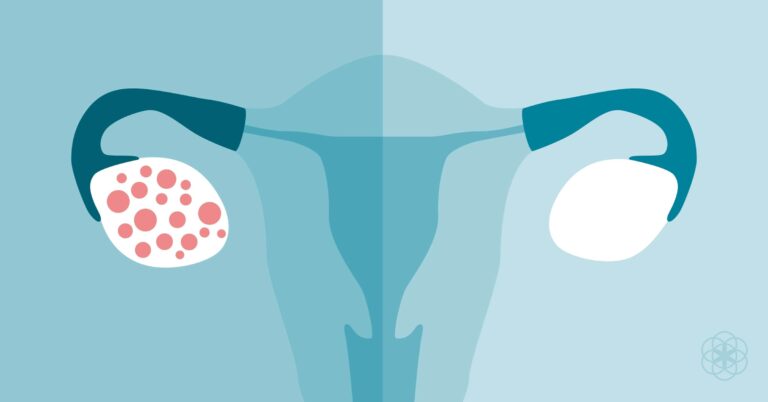
PCOS (Polycystic Ovarian Syndrome) is a female endocrine disorder where too much androgen hormone (testosterone) is being made in relations to estrogen. It affects up to 10% of all women. It is thought that improper insulin regulation is a common cause and shows up in girls as young as 9 years old through post menopausal women. PCOS is one of the main causes of infertility, but PCOS is a symptom of an underlying endocrine imbalance not the reason for the infertility.

Common symptoms of PCOS include:

  • Irregular or no menstrual periods (for women of reproductive age)
  • Irregular ovulation, with or without monthly bleeding
  • Acne
  • Excess hair growth on the face and body
  • Thinning scalp hair
  • Accumulation of un-ruptured follicles on the periphery of the ovaries (mislabeled as “cysts”, often called polycystic ovaries)

It is not necessary to have all of these symptoms to have PCOS. In fact it is not necessary to have “polycystic ovaries” to have PCOS. PCOS manifests itself differently in each woman.

I believe that Chinese Medicine is the best medicine on the planet to deal with PCOS and any hormonal imbalances. Using acupuncture, herbs and nutrition we can regulate the hormonal levels sometimes within a few cycles.

There have been a couple of recent studies which show what has been known clinically for 2000 years. Below are some of the articles written about the studies:

In addition these studies only used acupuncture and exercise. There was no dietary intervention or herbal medicine used as treatment. Once we add in these modalities the success rate increases dramatically!

So if you have been diagnosed with PCOS absolutely consider using Chinese Medicine as a treatment modality.

Yours In Health,

George Mandler CNS LDN LicAc

For so many years when people tell me they use honey in their tea or other foods I always question to make sure it isn’t honey from a plastic squeezable bear.    I am surprised how many people use inexpensive ‘honey’ from a standard grocery.   You get what you pay for.  

There is a great new article from the Food Safety Network entitled “Tests Show Most Store Honey Isn’t Honey”.  Please read it to learn about what was found in store bought honey.   The results aren’t sweet.

Tell FDA To Clearly Label GE Foods!

We all have food sensitivities to some degree. If and when they manifest as overt symptoms is very space and time dependent. Genetically engineered foods will only increase the likelihood that people will become more sensitive to foods (the technical term is a loss of oral tolerance) as potential antigens from one food/chemical is spliced into a completely different food.

We must stop the madness of Monsanto and other pharma giants from controlling all seeds.   (for more info click here).

Please sign this petition to request labeling on Genetically Engineered foods.   We have a right to know if we are eating a genetically altered food.   The ignorance so many so called experts display when they say there is no harm with GE foods is baffling.   I had constant battles with my biochemistry professor about this.  Hopefully he has opened his eyes to the dangers.

If more food is clearly labeled “Genetically Modified” there will be less demand and less madness.   Obama has already let Alfalfa seeds slip on through, now the government wants to not inform people if they are eating GE foods. Please sign, this is important for future generations.

Yours In Health,

George Mandler LDN LicAc


Be Smart About Taking Your Multi Vits and Minerals

In the last few weeks two awfully designed studies regarding vitamin supplementation created some negative headlines around choosing to supplement.

One study published in JAMA wrongly concluded that “vitamin E” increases the risk the prostate cancer.  Problem was they weren’t using Vitamin E, just a portion of it.  The use of only 1 portion of the Vitamin E class of molecules (in this case alpha-tocopherol) leads to other well documented deleterious consequences.  This study was a faulty design with faulty assumptions whose mistake was made countless times in studies over the past 20 years regarding Vitamin E metabolism.  But for some reason previous data was ignored.  There are additional faults with this study and the hyperbole conclusions spun by the mainstream media ‘health writer’ pundits is extraordinary.   I’ll blog on this soon. Read the rest of this entry