Ancient Wisdom Treats Modern Diseases

Acupuncture

What Is Acupuncture?

Acupuncture is a time-tested, clinically proven medical therapy used to treat a wide range of health concerns. It’s one branch of Chinese medicine that has been practiced for over 2,000 years—and it’s still evolving today.

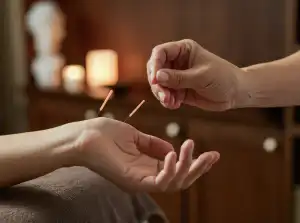
At its core, acupuncture uses very fine, sterile needles placed in specific combinations at precise points on the body. These points send signals that help regulate bodily functions, relieve pain, calm the nervous system, and support the body’s natural healing ability.

It might sound a little wild at first—how could inserting tiny stainless-steel needles actually help? Yet the effects can be profound. I still find it amazing that such a gentle intervention can produce meaningful, sometimes dramatic, changes in the body.

Not All Acupuncture Is the Same

There are thousands of acupuncture styles. I often compare an acupuncture needle to a paintbrush.    It is practitioner-dependent, and what may work for one person may not work for another.

You wouldn’t say, “I saw one painting and didn’t like it, so all paintings are bad.”
In the same way, saying “I tried acupuncture and it didn’t work” usually just means you tried one style with one practitioner at one moment in time.    

What makes acupuncture effective for you depends on several factors:

  • The practitioner’s skill, training, and depth of experience
  • The style of acupuncture being used
  • The quality of the patient–practitioner relationship
  • Your own body’s responsiveness (some people resonate more with certain styles than others.

I practice a Korean style known as Saam – you can read more here.

What Are the Needles Like?

All modern acupuncturists use FDA-approved, sterile, single-use needles. These needles are used once and then safely discarded. The risk of infection is close to zero. In the Saam style I practice, the risk of injury, such as a pneumothorax, is about zero because almost all points are below the elbows and knees.

Many people fear acupuncture because they think of hypodermic needles—the kind used for injections or blood draws. Acupuncture needles are completely different. They are solid (not hollow), hair-thin, and designed to gently penetrate the skin at a shallow depth.

The needles I typically use range from 26–30 gauge, while some styles (such as Japanese acupuncture, which I previously practiced) use even finer needles—36–40 gauge. Most patients are surprised by how subtle the needles feel.

How Many Needles Do You Use—and Where?

The number and placement of needles depend on the treatment style.

99% of my treatments have been done using a highly effective Korean system called Saam acupuncture, which usually uses just four needles per session. Occasionally, for pain conditions, I may use a Tung-style treatment with 3–8 needles.

Most treatments involve four needles, and very rarely more than eight.

In Saam acupuncture, all points are located below the elbows and knees—the same distal points described in the Huang Di Nei Jing, the foundational classic of Chinese medicine.

Does Acupuncture Hurt?

In my style of practice, you may briefly feel the needle as it passes through the skin. Once it’s in and you’ve settled on the table, there should be no ongoing discomfort.

Most people relax deeply. Some notice sensations such as:

  • Warmth
  • Heaviness
  • A gentle spreading or flowing feeling
  • A sense of energy moving

Even patients who were initially nervous about needles often tell me they feel calm, grounded, and refreshed afterward.

What Conditions Do You Treat?

acupunctureEven very chronic conditions are often worth trying three treatments to assess whether acupuncture is helpful for you. I’ve witnessed remarkable changes using only four needles—sometimes right before my eyes.

Our bodies have an incredible capacity to heal when given the right input, and I truly see this every day.

One honest note: Tinnitus alone has not been a strong area of success in my practice. If tinnitus is your only concern, I may not be the right provider. However, when tinnitus occurs alongside other health issues, patients often notice improvements in their overall well-being.

You’ll often see this standard statement (including on my own website):

The World Health Organization recognizes acupuncture as effective for a wide variety of conditions, including:

General Health

  • Allergies, asthma, sinusitis
  • Headaches, TMJ
  • Back pain, sciatica, musculoskeletal issues
  • Insomnia, anxiety, depression
  • High blood pressure
  • Chronic fatigue, fibromyalgia
  • Digestive disorders, constipation
  • Sexual dysfunction
  • Post-operative recovery, palliative care

Women’s Health

  • Menstrual irregularities
  • Menopause
  • Fertility challenges
  • Pregnancy, childbirth, lactation
  • Postpartum recovery
  • Ovarian and uterine concerns

Men’s Health

  • Prostate health
  • Infertility
  • Erectile dysfunction

Preventive Care

  • Stress management
  • Wellness and longevity
  • Seasonal health support

Areas of Special Interest

I have particularly strong results and a special clinical interest in:

  • Digestive issues (IBS, colitis, gas, bloating)
  • Anxiety
  • Gynecological imbalances
  • Fatigue, including chronic fatigue syndrome
  • Maternal health (pregnancy and postpartum care)
  • Pain management (especially low back, neck, and shoulders)
  • Men’s urogenital and sexual health

How Does Acupuncture Work?

Modern research suggests acupuncture may influence the fascia—a three-dimensional connective tissue network that envelops the entire body. Fascia plays a key role in structural support, intercellular communication, and overall regulation.

Interestingly, over 80% of major acupuncture points lie within fascial boundaries between muscles and bones, and many acupuncture meridians closely align with fascial planes. Research into this connection is ongoing and fascinating.

What Should I Wear?

Wear comfortable clothing.
Loose pants or sweats and a comfortable top work well. Many patients keep a pair of shorts in their car and change in the room if needed.

How Many Sessions Will I Need?

Treatment frequency varies from person to person.

  • Acute conditions: Often 1–2 sessions per week for 2–3 weeks
  • Chronic conditions: Typically, once per week for several weeks, followed by reassessment

After your first visit, I’ll have a much clearer sense of what your body needs.

It’s important to know that ten people with the same Western diagnosis often receive ten different treatments. Saam acupuncture focuses on restoring function and balance in your body—not simply treating a named disease.

How Long Is Each Session?

  • Follow-up sessions: 45–55 minutes (including check-in and treatment)
  • Initial comprehensive visit: Approximately 90+ minutes

How Much Does Acupuncture Cost?

  • Regular sessions: $80–$90 per visit (depending on frequency and complexity)
  • Initial comprehensive intake: Additional $100

Because I am also a licensed dietitian, sessions often include guidance on diet and nutrition—cornerstones of long-term health. Treatments frequently go beyond needles alone and may include lifestyle recommendations, supplements, or herbal support when appropriate.

Is Acupuncture Covered by Insurance?

Yes. I am a preferred provider for Massachusetts insurance plans that contract with acupuncturists, including:

  • Aetna
  • United
  • BCBS
  • Harvard Pilgrim
  • Tufts
  • BMC / MassHealth
  • MGB
  • Fallon

If your plan is listed, insurance is billed directly and you are responsible only for your copay.

All acupuncture visits are also eligible for HSA/FSA funds, and superbills are available upon request.


*”I didn’t even tell George anything was wrong. Yet he knew my symptoms just by checking my tongue and pulse. I was sold. Since starting treatment for fatigue, my energy has been steadily increasing and I’m functioning at a steadily higher level. As a single mom, this is vitally important.”
Janet B, Maynard, MA

*These testimonials do not imply that similar results will happen for you by using our services. The testimonials displayed in the text are shown verbatim and in their full length, and no compensation was received in return.
Skip to content